Immigrant Child by Hina SanaUllah (Skin Tones and Heart Beats)
“I connected two lands like a human bridge.
a token. a symbol. a moving ridge.
Two languages, one tongue.
Born to bring people together, yet
an outsider among.
Two cultures, two diets, too much reconciled.
I am an immigrant child.”
…
Where is home? What is return? What is belonging? Where do I stay?
I search for home, in my own home. I search for belonging, in my own space. I search for acceptance, in my own self. I search, yet I cannot find what I seek for.
I am unique. I am different. I am not like them, and they are not like me. Born on one land, but raised in two. Raised in the lifestyle of the land on which I was born. Brought up in a culture that lives beyond. A culture carefully preserved. Traditions safeguarded in fear of forgetting them. Urdu and Punjabi spoken to us. French and English spoken to them. Each language has become my own. And I have come from them. I am part of them. I belong to both lands, languages and cultures. This is me. And this is home.
…
I have a passion for history. It fascinates me to learn about our past. To understand how we lived, thought and evolved. But I want to seek more. I want to learn about MY past. I want to read about my family’s history from Pakistan. Who were they? Where did they come from? How did they live? I search for my roots. I search for familiarity on a land that has no trace of my ancestors. And this breaks me. I have nothing at hand to learn about my past. No pictures, no documents, no oral histories to unfold what I seek. The only way to learn is to physically reconnect with my motherland.
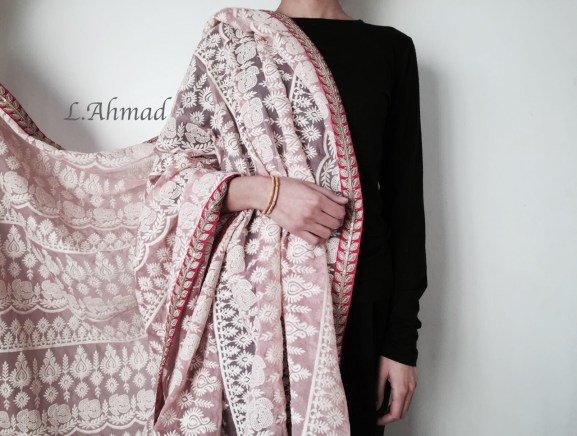
Pakistan, a land in the distance, which feels so close. Its culture and traditions have been recreated in a new space and on a new land. Urdu is the only form of communication between me and my parents. Between me and those living in Pakistan. Language allows for cultural engagement, awareness, understanding and respect. And to me, Urdu is a symbol of my roots carefully anchored on this land for generations to come. It is a mother tongue similar to the melodies of a Sufi poetry that revive the heart whenever it’s words are heard. Urdu is rhythmic, but Punjabi is earthly and rich. It is my parent’s tongue. A language of folk songs orally preserved and sang during despair and joy. Punjabi lives on the new land and I hope to strengthen its ties to it. Beyond language, there is food. A diet that tries to remember the taste of spices from back home. Shalwar kamiz also belongs to the cultural identity of Pakistan that has taken a new meaning on this land. A garment with slits on two sides worn with a dupatta on the neck or loosely on the head to authenticate our true identity.
With much effort and struggle, my parents have persevered the language, food and clothing of Pakistan. Today more than ever, I feel connected to the land of my parent’s because of their attempts. And for that, I will always be thankful. Yet, I still have difficulty in identifying myself as fully Pakistani. It is a place that I only know from a distance. I could never truly experience Pakistan. I could never fully understand the land itself, because I am not from there. When I visit, I feel like a stranger. A stranger who does not understand the lifestyle and customs. I feel out-of-place. I do feel a sense of belonging, but it is not the same as Pakistanis living there. It is a different form of attachment. It is more about trying to understand my parent’s land than my own. It is about learning where I came from. Learning about the land.
But then where am I from? I am from here. From Canada. I am rooted on Canadian soil. This is my land. The only space I know. This is familiar. This is comfortable. It is an inherent part of my reality. A reality that I am not willing to give up. Memories connecting to this land. French and English, two languages that are also part of who I am. I cannot separate myself from a place that has connected me to beautiful souls from across the world. But sometimes, I am made to feel like a stranger in my own home. I search for belonging when I already belong. My identity is constantly questioned within my own home, as though I belong somewhere else. My body and my choices are being controlled within the land I call home. I am supposed to feel secure and free, but these days all I feel is betrayal, anger and sadness. Still, I remain committed to battle against bigotry, colonialism and racism to live in a safe space that we all hope for.
With my own hands, I carved my own identity. My self is defined by two spaces and two realities that seem so interchangeable yet are completely different. On this land, I will maintain my roots. I will always remember my parent’s struggle. On this land, a new history is written down. A history of immigration. A story of self exploration. A story about the unity of two lands.
I finish with the words of Ijeoma Umebinyo, “So, here you are. too foreign for home. too foreign for here. never enough for both.”
 Thoughts of Nissa
Leave a comment