honour. izzat. women.
Women have become tied to respect, reputation and pride. We have been stripped from our individuality. We are tied to family and society’s honour. Our hands are tied. Our thoughts are to be controlled. A patriarchal society looms over our heads. A community dominated by men feels threatened by women’s freedom. Women and honour have been placed within the same space. Our movements are to be restricted. Our actions are to be supervised. We are expected to be submissive. Expected to be silent and only to listen. Voices of women are to be silenced.
Why is a family’s pride held within the hands of women? Why do women hold the responsibility to safeguard a family and community’s honour? And several of us ask the question, where is pride and honour for men? The south asian community does not place men within the same space as honour. Respectability only concerns women.
…
In several regions and communities, women have been associated with land and respectability. Women symbolize land. Her body embodies respectability. If a woman is raped or touched by an invader, it is as if the land has been corrupted. The dishonouring of women affects the whole community. This is exactly what happened in 1971 during the Bangladesh genocide where violence against women increased enormously . Women were raped. They were stripped naked. They were murdered. And so was the land. The land was corrupted when the woman’s dupatta was forcefully taken off.
I know that the 1971 genocide in Bangladesh differs greatly from honour and pride that I want to address here in the West, but the association of women with honour has roots imbedded in the idea that women symbolize land. If a woman’s respectability is shattered, the land in which she resides is also dishonoured. Here, women symbolize the home. She is responsible for upholding the household’s honour. If she does not preserve its izzat (honour), the home loses its own status of respectability. Women’s honour becomes tied to the home, just like women’s bodies are tied to the land and nation.
Now I don’t want to pretend like there is no such thing as a reputation and honour. There definitely is. And it is not necessarily wrong. But it is wrong when honour is tied to women. It is wrong when her actions and even thoughts are controlled to uphold honour. It is wrong when our thoughts and actions are driven in fear of breaking a family or a community’s honour. Honour should not be associated with anyone. Honour should be earned through value and respect. Women are not responsible for anybody’s izzat. Every single individual is responsible for their own character and reputation.
Desi communities have an obsession with preserving their honour. This so called izzat is only a reflection, an image they want to portray to their surroundings. They want to uphold their honour in the eyes of people. They fear about what others will say if they don’t behave or think in certain ways. Basically, izzat is driven by other people’s opinions. And because of this thought, honour has suffocated women. Our movements are to be controlled and supervised. Daughters are disowned when they break down barriers set by society and family. Those boundaries that are defined by patriarchal societies. But there are no restrictions placed on sons. There are no barriers. And even if a son misbehaves, he will be forgiven. He will be given a second chance. He will be accepted back into the family. But if a daughter misbehaves, she will never be accepted back into her family in the same way a son would. Even if a daughter changed and moved on with her life, her past will forever follow her. People will never let go of her mistakes like they would for a man. Her actions will never be forgotten because as a woman, she was expected to uphold the izzat of the household and she wasn’t able to. But why is it so different for a son? Because he is a man. It’s that simple and this is the truth. Society has raised the importance of men, but denied any mobility and freedom to women.
One of the most common issue I can think of related to honour is marriage. When daughters (and even sons) refuse to marry a relative or anyone within the caste of parents, it becomes an issue of izzat. A rejection from a daughter to marry someone she doesn’t want to, shatters the honour of parents. It is not honour that parents fear to break, but the thought of others. They fear the thoughts of their relatives if they don’t marry within a specific household. ‘What will my relatives think of me?’ is what parents fear the most. But since when has honour become much more important than the life of daughters (even sons) and their choices and decisions. I remember once reading online the following, “How could you choose a guy over your parents?”, “But how could my parents choose honour over me?” The last sentence speaks to me. I won’t go more in detail about marriage, because it requires a lot of space and I want this post to be more focused on izzat. Still, I had to mention this issue because it seems that in brown communities, a woman’s life is only revolved around marriage.
Honour. Izzat. Reputation. I am frustrated. I am suffocated. I am tired. Each of our behaviours and thoughts has to be monitored. Women cannot stay out for long because it becomes an issue of izzat. “What will people say if they see you out”, “What will people say if you’re always hanging out outside”. People will talk about that woman. They will talk about how her parents have allowed her to go out ‘this late’. They will talk about how she is not a respectable woman because she never stays at home. I don’t care about what people think. I don’t care if they talk about me. I don’t care anymore. I don’t care because when I ‘go out’, I hold on tight to my values. I respect myself and my parents. But most importantly, I am aware that God is watching. I would never and I have never done anything wrong when I ‘go out’ whether it be late at night or all the time, and so I don’t fear about what people say, because I have nothing to hide. Brown communities want to control our movements. They want to keep us hidden. They want us to remain within the four walls of the house. Because it is safer for women. In reality, when women are kept at home for safety, it is to safeguard and protect the household and family’s honour.
Now, I don’t want this post to be misunderstood. I don’t want it to be read in a way that seems that I am encouraging women to disobey their parents or rebel against them. Never. I am expressing my frustration against brown families and their mentalities. I want to change this mindset. I want to break down barriers that have restricted us from freedom. I want to destroy this patriarchal way of thinking. This sort of thought has literally taken the lives of women in the name of honour. We have rights and a voice. Let us reclaim what is ours. Let us forget about what people will say in the name of honour, and let us all be driven by what God has to say.
This is for women who have never been given a voice. This is for brown women,
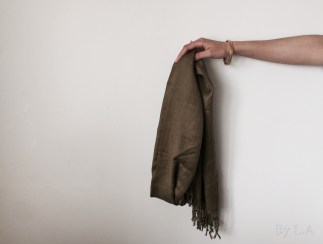
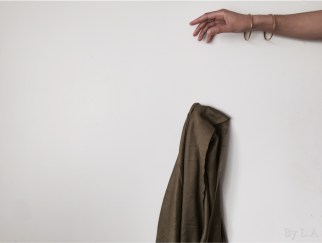
And when her hands became too weak to hold the heavy weight of honour, she fell. She let go of society’s burden in search for her freedom, her movement and her voice.
 Thoughts of Nissa
Leave a comment